
The Impact of Wrapper Leaves on Cigar Profiles
Ask a cigar expert or seasoned cigar lover how important a cigar’s wrapper leaf is to its overall flavor, and you’ll likely get a range of answers from “very” to “extremely.” Some estimate that wrapper flavor contributes 70% or more of a cigar’s overall flavor profile! Just why is this the case? And how do wrappers influence cigar tasting notes? We’ll answer those questions and more right here.
What is a cigar wrapper?
A cigar wrapper is the exterior leaf on a cigar. It is (typically) a single leaf, carefully rolled to encase the other two components of a cigar, the binder, and the fillers.
What makes cigar wrappers so special?
Different types of tobacco have different traits. While cigar wrappers can come in many forms, from light and delicate (Connecticut Shade) to bold and dark (Oscuro), they share a few common elements. (For a closer look at the different types of wrappers, click here.)
All wrappers are valued for their appearance and flavor. As a general rule, the wrapper is the most expensive leaf of a cigar. They’re the most sought-after leaves, and it’s crucial that they look, smell, and taste amazing. Often, cigar wrappers get some sort of special treatment. They may be covered to protect them from the sun and ensure a light, smooth appearance. Or they may be cured and aged for an extended period to develop deep, rich flavors.
Binders and filler tobaccos, on the other hand, still impart a lot of flavor, but they’re usually valued for other factors such as combustion. Indeed, binders and fillers that burn smoothly and evenly can complement a flavorful cigar wrapper to deliver a perfect (or near-perfect) smoking experience.
How wrapper leaves affect cigar profiles
One of the best ways to examine the importance of wrapper leaves on cigar profiles is to look at a real-life example.
Take two newly released cigars from Macanudo: Ecuadorian Sumatra and Ecuadorian Shade.
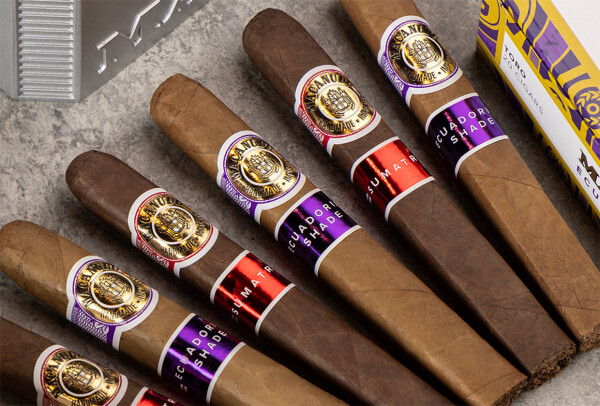
Both come in the same sizes. Both were crafted at the exact same factory. And both sport identical binders and fillers. But they differ in the wrapper leaf. Ecuadorian Sumatra has a dark, Maduro wrapper, while Shade has a light, creamy Connecticut Shade wrapper.
As a result of this distinction alone, Sumatra is medium-bodied, while Shade ranges from mellow to medium. What’s more, Sumatra provides rich tasting notes of oak and dark wood. Shade, though, offers lighter notes of honey and cream.
To sum up: wrapper leaves may not be the only factor that influences a cigar’s flavor profile, but they are one of the most vital.
What’s your favorite cigar wrapper? Sign up for Cigar World and let us know with a comment!

Comments
No one has commented on this page yet.